

New Technology Trends in Hospitality That Can Reshape Your Business
Technology within the hospitality industry is advancing at an unprecedented pace in 2026. From the widespread adoption of artificial intelligence and conversational automation to immersive virtual experiences and data-driven personalization, guest expectations are evolving faster than ever before. Today’s travelers don’t just appreciate innovative technology—they increasingly expect it to be seamlessly integrated into every touchpoint of their experience.
For hospitality leaders, keeping pace with these rapid changes can feel overwhelming. Which technologies genuinely improve guest satisfaction? Which investments drive measurable ROI? And how do you future-proof your venue without overcomplicating operations or infrastructure?
To help, we’ve assembled ten fast-growing hospitality technology trends shaping the industry in 2026. These innovations are not limited to a single hospitality segment; they offer significant value across hotels, convention centers, stadiums, arenas and large-scale event venues alike.
- Increased Sustainability Focus
- In-Person and Cyber-Security
- Social Media Integration
- Hybrid Event Access
- Mobile Technology Adaptation
- Focus on Personalization
- Streamlined, Efficient Automation
- Intuitive Contactless Solutions
- Hotel Influencer Marketing
- Conversational AI Integrations
1) Increased Sustainability Focus
More and more consumers claim sustainability as a key factor when making a purchasing decision. A 2024 PWC study found that:
- Nearly nine-in-ten (85%) worldwide consumers have experienced the disruptive effects of climate change in their daily lives.
- 80% of consumers are willing to pay more for sustainably produced or sourced goods.
- Respondents were willing to pay an average of 9.7% more for goods that meet specific environmental criteria.
The hospitality industry is no exception to this rule; increasing sustainability efforts is an important technology trend across the hospitality industry. Take, for example, sustainability in stadiums & arenas, leveraging innovations including:
- Automated facilities management using automated, adjustable smart sensors
- Renewable energy sources such as IoT-integrated solar panels and wind turbines
- LEED accredited water efficiency via integrated smart irrigation systems
- Plastic reduction through automated stadium food stocking
2) In-Person and Cyber-Security
The world is becoming increasingly dangerous on both digital and physical fronts. A 2024 KPMG survey of 200 C-suite cyber leaders at companies with revenue of $1 billion and above found that:
- 40% of survey respondents report that their company had suffered a recent cyberattack resulting in a security breach.
- 38% of respondents had experienced one to three attacks.
- 76% of respondents expressed concerns about the increasing sophistication of new cybersecurity threats.
Whether online or in-person, the need for efficient security in hospitality venues is greater than ever.
Technology plays a pivotal role in many types of security for convention centers, hotels and stadiums, making both physical and cyber-security technology important trends within the hospitality industry. Some important technology to note includes:
- IoT-enabled sensors in sensitive areas guests aren’t supposed to access
- Face-tracking software that can track assailants and pinpoint where security personnel need to dispatch within your venue
- 24/7 network support to immediately counterattack ransomware, phishing and malware
Consistent software and network updates to protect against the latest forms of cybersecurity threats
3) Social Media Integration
Social media has become a dominant medium for hospitality marketing. According to Statista, out of 6.04 billion internet users worldwide, 5.66 billion people are social media users — 68.7 percent of the world’s population. Without social media integration, hospitality businesses are missing out on a significant means of reaching consumers and converting sales, especially to younger generations such as Generation Z.
Creating engaging social media campaigns for hotels, stadiums and convention centers involves several key strategies including:
- Curating appealing, brand relevant social media accounts
- Designing hashtag driven social media campaigns
- Providing account giveaways such as hotel amenities
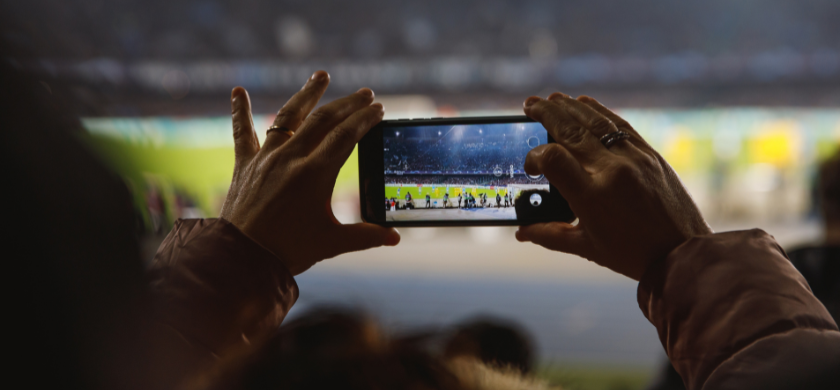
- Creating social media-catered photo opportunities
- Leveraging creative seasonal deals
Combining these strategies and more can integrate social media as a tentpole of your venue’s marketing strategy.
4) Hybrid Event Access
Events at modern hospitality venues don’t need to be confined to a single geographic location; hybrid events can extend the outreach and impact of tour events to a global scale. There’s a massive market for hybrid events. A 2024 study from Grand View Research found:
- The global virtual events market size was estimated at 98.07 billion USD in 2024.
- The global virtual events market was estimated to reach USD 297.16 billion by 2030, growing at a CAGR of 20.0%.
- North America dominates the virtual events market, with a revenue share of over 39% in 2025.
While all kinds of hospitality venues can benefit from hybrid events, conference centers are at the forefront of hybrid event experiences. Many conference centers opt to host hybrid conference events that combine high-quality conference webcasting integration, dedicated hybrid platforms and high-bandwidth conference internet access to build events that blow away in-person and virtual attendees alike.
5) Mobile Technology Adaptation
Smartphones are a dominant technology within the United States. In 2025, the Pew Research Center found that:
- 98% of Americans now own a cellphone of some kind.
- About nine-in-ten (91%) of Americans own a smartphone.
- The rate of American smartphone ownership has risen 56% since 2011—the first year the Center conducted a study.
Nearly every consumer your venue serves has smartphone access. Integrating essential functions of your hospitality business within smartphone technology streamlines and optimizes almost all guest experiences.
Many stadiums and arenas are at the forefront of mobile technology adoption, adopting technology including:
- Online food ordering & delivery apps that allow fans to order and receive food without leaving their seats
- Mobile ticketing integration that helps fans never forget their tickets at home
- Augmented reality connectivity for interactive, virtual integration with on-field action
6) Focus on Personalization
Personalization makes customers feel valued, which can lead to higher sales rates. McKinsey & Company found that:
- 71% of consumers expect companies to deliver personalized interactions.
- 76% of consumers got frustrated when personalization goals weren’t met.
- Companies that excel at personalization generate 40% more revenue from new consumer shopping behaviors than average players. In an industry as intimate as hospitality, a greater focus on personalisation can pay even greater dividends.
Take hotels, for example. Hotel personalization can convert directly into higher revenue via amenities such as:
- Managed WiFi portals integrating guest names and previous WiFi preferences into splash pages and log-ins
- Customized upsells within WiFi splash pages with higher chances of conversion
- In-room entertainment platforms catering entertainment options and additional advertisements for amenities
- Specific, targeted guest messaging via email, text and other platforms to plug additional upsells

7) Streamlined, Efficient Automation
Automation is optimizing workflow across varied pieces of technology in the hospitality industry, and guests have taken notice. A 2024 study from Mews found that nearly 80% of travelers are willing to stay at a hotel with a completely automated front desk or self-service kiosk.
A key to hospitality automation is a focus on minimizing time-consuming routine processes that can be better allocated for more specialized tasks. By automating manual data input, dynamic pricing, facilities management and more, hospitality professionals can focus on what they do best—catering to guest needs.
8) Intuitive Contactless Solutions
While they once seemed far-fetched, contactless solutions have increasingly become the norm for consumers. McKinsey & Company’s State of Consumer Digital Payments in 2024 Survey found that:
- Roughly nine in ten consumers in both the United States and Europe report having made some form of digital payment in the last year, reaching a new all-time high of 92%.
- In-store adoption of digital payments has increased from 19% in 2019 to 29% in 2024.
- Increased in-store penetration represents a channel totaling roughly $10 trillion of annual consumer-to-business spending across the United states & Europe.
Contactless technology can serve versatile purposes within the hospitality industry, including:
- Contactless payments for venues of all types
- Contactless check-in or check-out for hotel guests
- Contactless, digital room keys in hotels and convention center meeting rooms
- Contactless mobile ticketing for arenas, stadiums and outdoor venues
9) Hotel Influencer Marketing
Traveler behavior is being reshaped by social platforms, with purchasing decisions increasingly driven by trusted digital personalities rather than traditional advertising. According to Statista, the global influencer marketing market has grown from just $1.7 billion to $32.55 billion in 2025, underscoring how influential creators have become in shaping consumer choices—especially in travel and hospitality.
For hotels and hospitality venues, influencer marketing represents a powerful way to reach niche audiences, build trust and drive bookings. Some key influencer marketing strategies gaining traction in hospitality include:
- Partnering with micro- and mid-tier influencers to target specific traveler demographics such as business travelers, luxury guests or eco-conscious tourists.
- Leveraging short-form video content on platforms like Instagram Reels, TikTok and YouTube Shorts to highlight immersive guest experiences.
- Using influencer-generated content across hotel websites, booking pages and digital signage to reinforce credibility.
- Tracking ROI through promo codes, affiliate links and booking attribution tools tied directly to influencer campaigns.
As competition for traveler attention intensifies, hotels that strategically integrate influencer marketing into their digital strategy can stand out earlier in the guest decision-making journey.
10) Conversational AI Integrations
Artificial intelligence is rapidly becoming a core component of how businesses communicate with customers—and hospitality is no exception. Among 48,000 survey respondents across 47 countries, KPMG found that 66% of people use AI regularly, while 83% believe AI will deliver a wide range of benefits, signaling strong global acceptance of AI-powered interactions.
From booking inquiries to in-stay requests, conversational AI allows hotels to deliver personalized service at scale. Key conversational AI applications in hospitality include:
- AI-powered chatbots on hotel websites and mobile apps to answer FAQs, manage reservations and upsell amenities
- Voice-activated assistants in guest rooms for lighting, temperature control, room service and local recommendations
- Multilingual AI support to better serve international guests without expanding staffing needs
- AI-driven guest messaging platforms that integrate with PMS and CRM systems to provide real-time, personalized responses
As guest expectations for speed, convenience and personalization continue to rise, conversational AI integrations are becoming less of a novelty and more of a competitive necessity within the hospitality industry.
Support Transformative Hospitality Technology Trends With Hospitality Network HSIA
Leveraging the right technology to support any one of these modern advancement can deliver meaningful gains in both guest satisfaction and operational efficiency. From personalized digital experiences to enhanced security and smarter automation, these trends offer measurable returns for a wide range of hospitality environments.
However, even the most advanced technologies are only as effective as the infrastructure behind them. Without fast, reliable and secure network connectivity, solutions designed to elevate the guest experience can quickly become points of frustration instead. In 2026, high-performance internet access is the foundation that enables every digital touchpoint, from streaming and mobile engagement to AI-driven services and real-time data analytics.
As a trusted provider of high-speed internet and managed network solutions for hospitality venues nationwide, Hospitality Network specializes in designing and deploying WiFi infrastructures built to support today’s most critical technology trends. Request a consultation with our team to learn how our responsive, secure and future-ready networks can power your venue’s next phase of technological transformation.
